-35% SUR TOUS NOS TABLEAUXLIVRAISON OFFERTE DÈS 59€FABRIQUÉ EN EUROPE-35% SUR TOUS NOS TABLEAUXLIVRAISON OFFERTE DÈS 59€FABRIQUÉ EN EUROPE-35% SUR TOUS NOS TABLEAUXLIVRAISON OFFERTE DÈS 59€FABRIQUÉ EN EUROPE-35% SUR TOUS NOS TABLEAUXLIVRAISON OFFERTE DÈS 59€FABRIQUÉ EN EUROPE-35% SUR TOUS NOS TABLEAUXLIVRAISON OFFERTE DÈS 59€FABRIQUÉ EN EUROPE-35% SUR TOUS NOS TABLEAUXLIVRAISON OFFERTE DÈS 59€FABRIQUÉ EN EUROPE
35% OFF ALL OUR PAINTINGSFREE DELIVERY OVER £59MADE IN EUROPE35% OFF ALL OUR PAINTINGSFREE DELIVERY OVER £59MADE IN EUROPE35% OFF ALL OUR PAINTINGSFREE DELIVERY OVER £59MADE IN EUROPE35% OFF ALL OUR PAINTINGSFREE DELIVERY OVER £59MADE IN EUROPE35% OFF ALL OUR PAINTINGSFREE DELIVERY OVER £59MADE IN EUROPE35% OFF ALL OUR PAINTINGSFREE DELIVERY OVER £59MADE IN EUROPE
35% DE DESCUENTO EN TODOS NUESTROS CUADROSENVÍO GRATIS A PARTIR DE 59€FABRICADO EN EUROPA35% DE DESCUENTO EN TODOS NUESTROS CUADROSENVÍO GRATIS A PARTIR DE 59€FABRICADO EN EUROPA35% DE DESCUENTO EN TODOS NUESTROS CUADROSENVÍO GRATIS A PARTIR DE 59€FABRICADO EN EUROPA35% DE DESCUENTO EN TODOS NUESTROS CUADROSENVÍO GRATIS A PARTIR DE 59€FABRICADO EN EUROPA35% DE DESCUENTO EN TODOS NUESTROS CUADROSENVÍO GRATIS A PARTIR DE 59€FABRICADO EN EUROPA35% DE DESCUENTO EN TODOS NUESTROS CUADROSENVÍO GRATIS A PARTIR DE 59€FABRICADO EN EUROPA
35% DI SCONTO SU TUTTI I NOSTRI QUADRISPEDIZIONE GRATUITA SOPRA I 59€PRODOTTO IN EUROPA35% DI SCONTO SU TUTTI I NOSTRI QUADRISPEDIZIONE GRATUITA SOPRA I 59€PRODOTTO IN EUROPA35% DI SCONTO SU TUTTI I NOSTRI QUADRISPEDIZIONE GRATUITA SOPRA I 59€PRODOTTO IN EUROPA35% DI SCONTO SU TUTTI I NOSTRI QUADRISPEDIZIONE GRATUITA SOPRA I 59€PRODOTTO IN EUROPA35% DI SCONTO SU TUTTI I NOSTRI QUADRISPEDIZIONE GRATUITA SOPRA I 59€PRODOTTO IN EUROPA35% DI SCONTO SU TUTTI I NOSTRI QUADRISPEDIZIONE GRATUITA SOPRA I 59€PRODOTTO IN EUROPA
35% RABATT AUF ALLE UNSERE BILDERKOSTENLOSER VERSAND AB 59€HERGESTELLT IN EUROPA35% RABATT AUF ALLE UNSERE BILDERKOSTENLOSER VERSAND AB 59€HERGESTELLT IN EUROPA35% RABATT AUF ALLE UNSERE BILDERKOSTENLOSER VERSAND AB 59€HERGESTELLT IN EUROPA35% RABATT AUF ALLE UNSERE BILDERKOSTENLOSER VERSAND AB 59€HERGESTELLT IN EUROPA35% RABATT AUF ALLE UNSERE BILDERKOSTENLOSER VERSAND AB 59€HERGESTELLT IN EUROPA35% RABATT AUF ALLE UNSERE BILDERKOSTENLOSER VERSAND AB 59€HERGESTELLT IN EUROPA
35% KORTING OP AL ONZE SCHILDERIJENGRATIS VERZENDING VANAF 59€GEMAAKT IN EUROPA35% KORTING OP AL ONZE SCHILDERIJENGRATIS VERZENDING VANAF 59€GEMAAKT IN EUROPA35% KORTING OP AL ONZE SCHILDERIJENGRATIS VERZENDING VANAF 59€GEMAAKT IN EUROPA35% KORTING OP AL ONZE SCHILDERIJENGRATIS VERZENDING VANAF 59€GEMAAKT IN EUROPA35% KORTING OP AL ONZE SCHILDERIJENGRATIS VERZENDING VANAF 59€GEMAAKT IN EUROPA35% KORTING OP AL ONZE SCHILDERIJENGRATIS VERZENDING VANAF 59€GEMAAKT IN EUROPA
-35% SUR TOUS NOS TABLEAUXLIVRAISON OFFERTE DÈS 59€FABRIQUÉ EN EUROPE-35% SUR TOUS NOS TABLEAUXLIVRAISON OFFERTE DÈS 59€FABRIQUÉ EN EUROPE-35% SUR TOUS NOS TABLEAUXLIVRAISON OFFERTE DÈS 59€FABRIQUÉ EN EUROPE-35% SUR TOUS NOS TABLEAUXLIVRAISON OFFERTE DÈS 59€FABRIQUÉ EN EUROPE-35% SUR TOUS NOS TABLEAUXLIVRAISON OFFERTE DÈS 59€FABRIQUÉ EN EUROPE-35% SUR TOUS NOS TABLEAUXLIVRAISON OFFERTE DÈS 59€FABRIQUÉ EN EUROPE
35% OFF ALL OUR PAINTINGSFREE DELIVERY OVER £59MADE IN EUROPE35% OFF ALL OUR PAINTINGSFREE DELIVERY OVER £59MADE IN EUROPE35% OFF ALL OUR PAINTINGSFREE DELIVERY OVER £59MADE IN EUROPE35% OFF ALL OUR PAINTINGSFREE DELIVERY OVER £59MADE IN EUROPE35% OFF ALL OUR PAINTINGSFREE DELIVERY OVER £59MADE IN EUROPE35% OFF ALL OUR PAINTINGSFREE DELIVERY OVER £59MADE IN EUROPE
35% DE DESCUENTO EN TODOS NUESTROS CUADROSENVÍO GRATIS A PARTIR DE 59€FABRICADO EN EUROPA35% DE DESCUENTO EN TODOS NUESTROS CUADROSENVÍO GRATIS A PARTIR DE 59€FABRICADO EN EUROPA35% DE DESCUENTO EN TODOS NUESTROS CUADROSENVÍO GRATIS A PARTIR DE 59€FABRICADO EN EUROPA35% DE DESCUENTO EN TODOS NUESTROS CUADROSENVÍO GRATIS A PARTIR DE 59€FABRICADO EN EUROPA35% DE DESCUENTO EN TODOS NUESTROS CUADROSENVÍO GRATIS A PARTIR DE 59€FABRICADO EN EUROPA35% DE DESCUENTO EN TODOS NUESTROS CUADROSENVÍO GRATIS A PARTIR DE 59€FABRICADO EN EUROPA
35% DI SCONTO SU TUTTI I NOSTRI QUADRISPEDIZIONE GRATUITA SOPRA I 59€PRODOTTO IN EUROPA35% DI SCONTO SU TUTTI I NOSTRI QUADRISPEDIZIONE GRATUITA SOPRA I 59€PRODOTTO IN EUROPA35% DI SCONTO SU TUTTI I NOSTRI QUADRISPEDIZIONE GRATUITA SOPRA I 59€PRODOTTO IN EUROPA35% DI SCONTO SU TUTTI I NOSTRI QUADRISPEDIZIONE GRATUITA SOPRA I 59€PRODOTTO IN EUROPA35% DI SCONTO SU TUTTI I NOSTRI QUADRISPEDIZIONE GRATUITA SOPRA I 59€PRODOTTO IN EUROPA35% DI SCONTO SU TUTTI I NOSTRI QUADRISPEDIZIONE GRATUITA SOPRA I 59€PRODOTTO IN EUROPA
35% RABATT AUF ALLE UNSERE BILDERKOSTENLOSER VERSAND AB 59€HERGESTELLT IN EUROPA35% RABATT AUF ALLE UNSERE BILDERKOSTENLOSER VERSAND AB 59€HERGESTELLT IN EUROPA35% RABATT AUF ALLE UNSERE BILDERKOSTENLOSER VERSAND AB 59€HERGESTELLT IN EUROPA35% RABATT AUF ALLE UNSERE BILDERKOSTENLOSER VERSAND AB 59€HERGESTELLT IN EUROPA35% RABATT AUF ALLE UNSERE BILDERKOSTENLOSER VERSAND AB 59€HERGESTELLT IN EUROPA35% RABATT AUF ALLE UNSERE BILDERKOSTENLOSER VERSAND AB 59€HERGESTELLT IN EUROPA
35% KORTING OP AL ONZE SCHILDERIJENGRATIS VERZENDING VANAF 59€GEMAAKT IN EUROPA35% KORTING OP AL ONZE SCHILDERIJENGRATIS VERZENDING VANAF 59€GEMAAKT IN EUROPA35% KORTING OP AL ONZE SCHILDERIJENGRATIS VERZENDING VANAF 59€GEMAAKT IN EUROPA35% KORTING OP AL ONZE SCHILDERIJENGRATIS VERZENDING VANAF 59€GEMAAKT IN EUROPA35% KORTING OP AL ONZE SCHILDERIJENGRATIS VERZENDING VANAF 59€GEMAAKT IN EUROPA35% KORTING OP AL ONZE SCHILDERIJENGRATIS VERZENDING VANAF 59€GEMAAKT IN EUROPA
Should You Add a Floating Frame to Your Canvas Art?
1 October 2026 Laure D 12 min de lecture
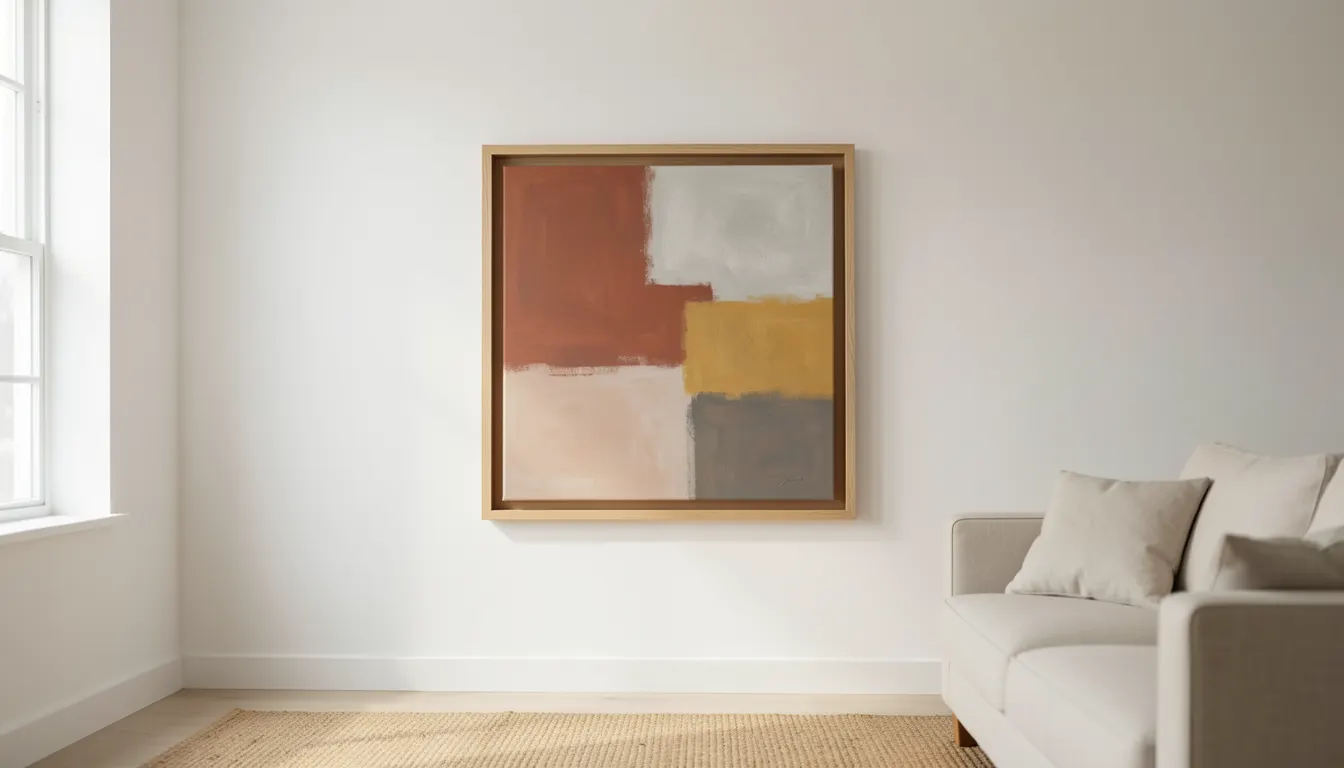
A floating frame, also called a floater frame, surrounds a stretched canvas with a visible gap between the artwork edge and the inner frame lip. That gap casts a thin shadow, making the canvas appear to hover inside the frame. The effect is clean, modern, and widely used in galleries and contemporary homes. Whether it suits your piece depends on canvas thickness, art style, wall color, and budget. This guide walks through the practical decisions so you can decide before you order.
A floating frame adds a visible gap between the canvas and the frame edge, creating depth and a modern gallery look. It works best on stretched canvases 1.5 inches or thicker and suits contemporary, minimalist, or abstract pieces. Expect to pay $40–$150 more than a standard frame, and allow 1/4 to 1/2 inch clearance for the shadow gap.
What Is a Floating Frame and How Does It Work?
A floating frame is a shallow box frame open at the front. The canvas sits inside, attached to the back or bottom of the frame with offset clips or screws. The inner edge of the frame does not touch the canvas face. Instead, a gap, typically 1/4 to 1/2 inch, runs around all four sides. Light hits the recessed canvas edge and casts a shadow line that outlines the artwork. That shadow line is the signature look.
Standard frames cover the canvas edge with a rabbet (the inner lip). Floating frames have no rabbet on the face. The frame depth must exceed the canvas thickness so the canvas face sits flush with or slightly behind the frame front. Most floating frames are 1.5 to 2.5 inches deep. Canvas bars are usually 3/4 inch (standard) or 1.5 inch (gallery wrap). A 1.5-inch canvas needs at least a 2-inch deep frame to sit properly.
Key Components
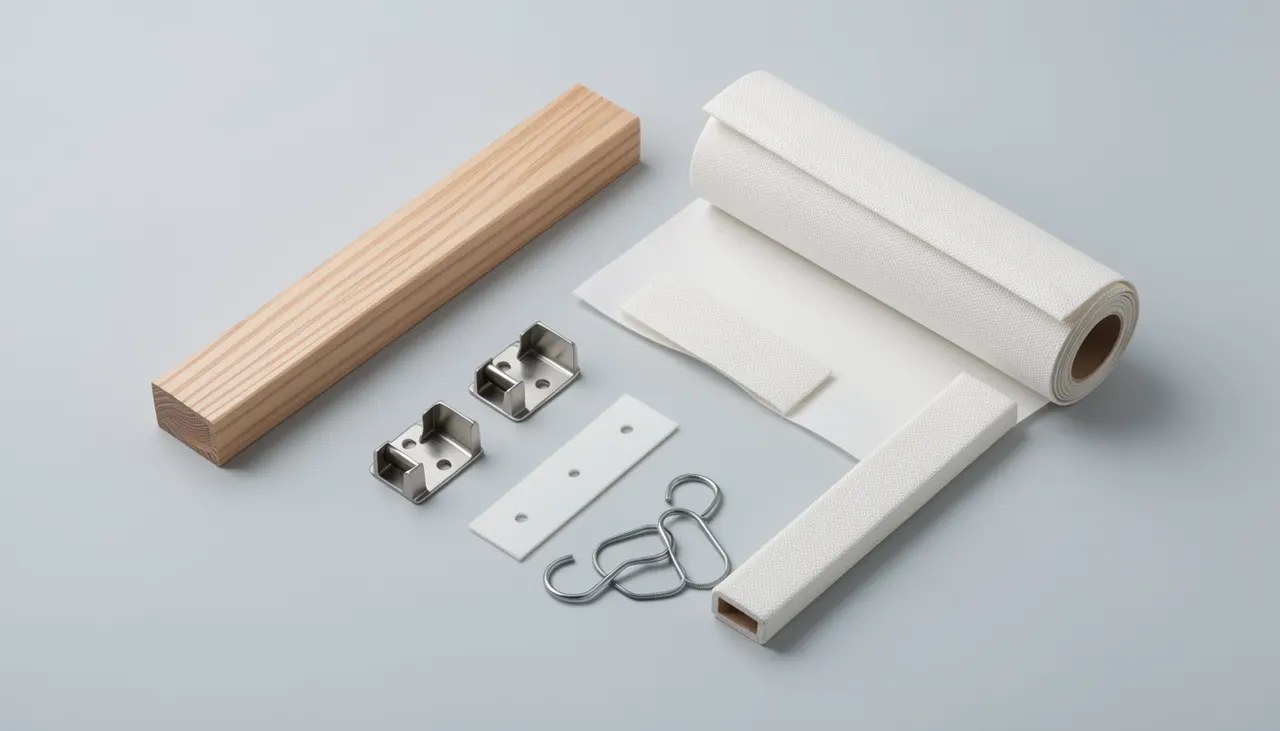
The frame itself is a four-sided box made of wood, metal, or composite. Wood options include oak, maple, walnut, and ayous. Metal frames are usually aluminum with a powder-coated finish. The mounting hardware, offset clips, Z-clips, or screw eyes, attaches to the stretcher bars, not the frame face. Spacers or shims set the gap width. A dust cover on the back seals the assembly. Hanging hardware (D-rings and wire) mounts to the frame, not the canvas.
Why the Gap Matters
The gap creates a visual separation that frames the artwork without covering any painted edge. On gallery-wrapped canvases where the image continues around the sides, a standard frame would hide that continuation. A floating frame reveals it. The shadow line also adds perceived depth, making a flat wall display feel more three-dimensional. The gap width controls shadow intensity: wider gap, stronger shadow.
Exploded view of floating frame parts
Visual Impact: Depth, Shadows, and the “Floating” Effect
The floating effect relies on contrast between the frame, the gap shadow, and the wall. On a white wall, a natural wood frame with a 3/8-inch gap produces a crisp gray shadow line that reads like a fine pencil outline. On a dark wall, the same gap may disappear unless the frame finish is light or metallic. Frame color and depth change the perception of the artwork size. A deep frame (2.5 inches) on a thin canvas (3/4 inch) creates a pronounced shadow box feel. A shallow frame (1.5 inches) on a thick canvas (1.5 inches) yields a subtle reveal.
Gap Width and Shadow Strength
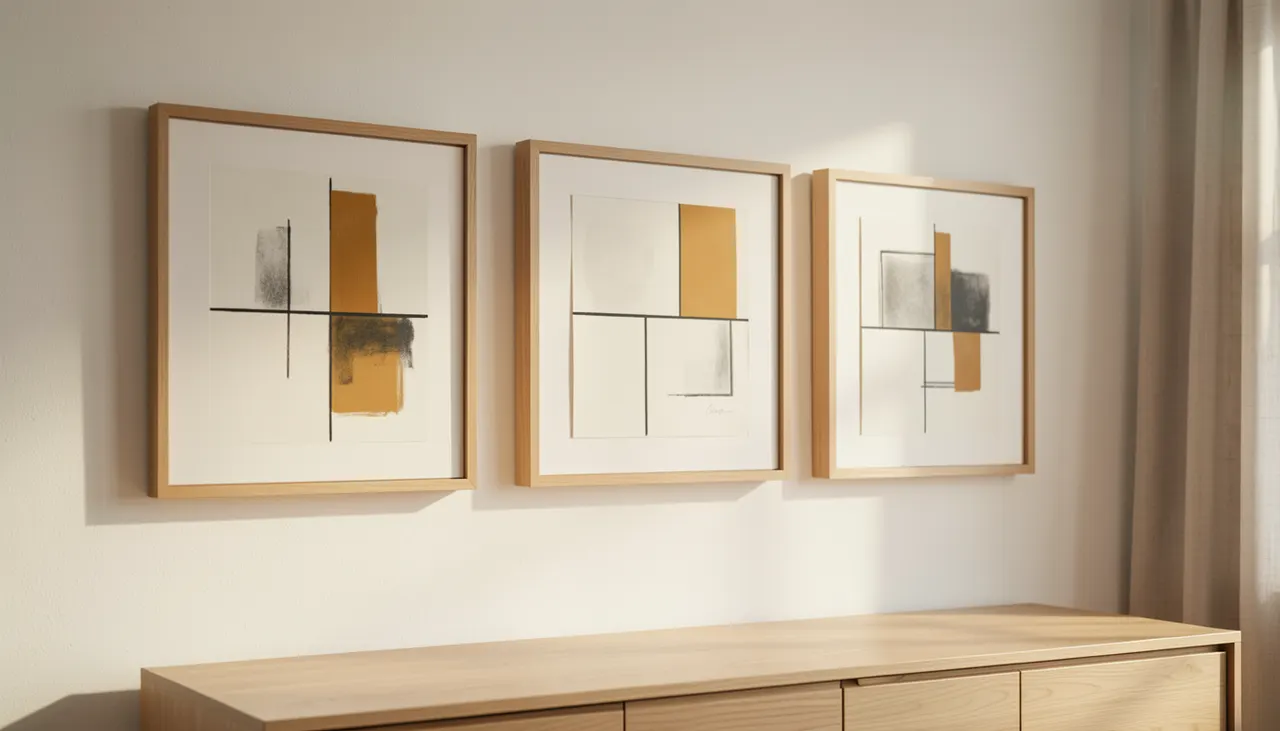
Standard gap sizes are 1/4 inch, 3/8 inch, and 1/2 inch. A 1/4-inch gap gives a hairline shadow, almost invisible beyond three feet. A 3/8-inch gap is the most common gallery choice: visible shadow at normal viewing distance without dominating. A 1/2-inch gap makes a bold statement but can look disproportionate on small works under 18 inches. The gap must be consistent on all sides; even a 1/16-inch variation is noticeable.
Frame Finish and Wall Color Interaction
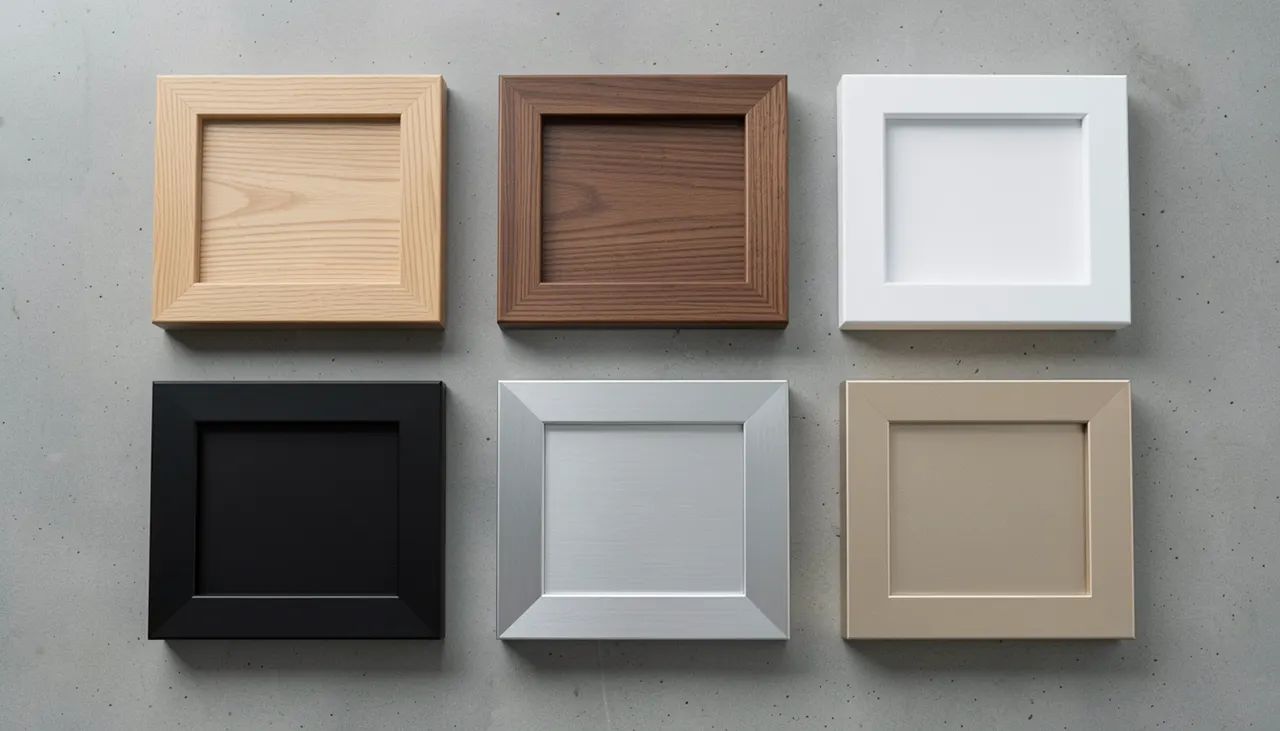
Matte black frames on white walls maximize contrast. Natural oak or walnut adds warmth and suits organic interiors. White frames on white walls create a subtle tone-on-tone shadow line. Metallic finishes (brushed gold, champagne silver) reflect ambient light, making the gap glow. Test by holding a sample frame corner against your wall in the room’s actual lighting, morning, evening, and artificial, before committing.
Three gap widths side by side on wall
When a Floating Frame Makes Sense (and When It Doesn’t)
Floating frames shine with contemporary, abstract, minimalist, and photographic prints on canvas. They suit gallery-wrapped edges where the image wraps around the sides. They complement modern, mid-century, Scandinavian, and industrial interiors. They are less suited to ornate traditional art, heavily textured impasto that needs protection from dust, or period rooms with decorative moldings where a standard frame harmonizes better.
Good Candidates
Gallery-wrapped canvases 1.5 inches or deeper. Abstracts with painted edges. Large-scale photography on canvas. Minimalist compositions with negative space. Multi-panel sets where consistent gaps unify the grouping. Works destined for high-traffic areas where the frame protects the vulnerable canvas corners.
Poor Candidates
Standard 3/4-inch stretcher bars unless you choose a shallow 1.5-inch frame (limited selection). Heavily textured paintings where the surface reaches the frame edge, dust settles in the gap and is hard to clean. Antique or vintage canvases needing conservation framing with UV glass and acid-free backing. Small works under 12 inches where the frame overwhelms the image. Budget projects: floating frames cost 30–50% more than standard frames of equivalent quality.
Frame depth must exceed canvas thickness by at least 1/2 inch to allow the canvas face to sit at or behind the frame front plane. Measure your stretcher bar depth first. Standard bars: 3/4 inch. Gallery wrap: 1.5 inch. Deep gallery: 2 inch. Add 1/2 inch minimum. A 3/4-inch canvas needs a 1.5-inch frame (rare) or 2-inch frame (common). A 1.5-inch canvas needs a 2-inch or 2.5-inch frame. A 2-inch canvas needs a 2.5-inch or 3-inch frame (custom).
Depth Selection Table
Canvas Thickness
Minimum Frame Depth
Recommended Frame Depth
Typical Availability
3/4 inch (standard)
1.5 inch
2 inch
Widely stocked
1.5 inch (gallery wrap)
2 inch
2.5 inch
Common
2 inch (deep gallery)
2.5 inch
3 inch
Often custom
2.5 inch (extra deep)
3 inch
3.5 inch
Custom only
Finish Options
Wood finishes: natural (clear matte), stained (walnut, espresso, gray), painted (white, black, custom colors). Metal finishes: brushed aluminum, powder-coated black, white, bronze, champagne. Matte finishes hide fingerprints and wall imperfections. Gloss finishes reflect more light but show scratches. For high-humidity rooms (bathrooms, kitchens), sealed wood or aluminum resists warping better than raw wood.
Wood finish samples on floating frame corners
Installation: Hardware, Wall Types, and Clearance
A floating frame adds weight and depth. A 24×36 inch canvas in a 2-inch oak frame weighs 8–12 pounds. Use two D-rings rated for the total weight, spaced at one-third down from the top. Coated picture wire between them. For drywall, use two picture hooks rated for 20 pounds each, anchored into studs if possible. For plaster, use plaster hooks or toggle bolts. For brick or concrete, use masonry screws with plastic anchors. The frame back sits 1.5 to 2.5 inches off the wall. Ensure furniture clearance: keep sofas and consoles at least 6 inches below the frame bottom.
Centering the Canvas in the Frame
Before hanging, verify the canvas is centered in the frame. Measure gap at all four corners. Adjust by loosening offset clips and shifting the canvas. Tighten clips evenly. Use a level on the frame top edge, not the canvas. The frame defines the visual rectangle. If the canvas is slightly skewed inside a perfectly level frame, the gap will look uneven. Some frames include built-in leveling feet on the bottom back edge for fine adjustment after hanging.
Lighting Considerations
Recessed lighting or track lights aimed at the frame face will cast shadows into the gap. Position lights at 30–45 degrees from the wall to minimize shadow distortion. LED strips mounted behind the frame (backlighting) create a halo effect but require a power source and deep enough frame to hide the strip. Test lighting at night before final placement.
Cost Comparison: Floating Frame vs. Traditional Frame vs. Unframed
Floating frames cost more due to deeper profiles, precise machining for consistent gaps, and specialized hardware. Prices below are for a 24×36 inch size in mid-range materials (ayous wood or aluminum). Custom sizes, premium woods (walnut, maple), or conservation-grade materials increase costs 50–100%. Unframed canvas with painted edges is the baseline. Standard frame covers the edge with a rabbet. Floating frame adds the shadow gap.
Price Ranges by Type
Framing Option
Material Tier
Price Range (24×36″)
Added Weight
Installation Difficulty
Unframed (painted edges)
,
$0 (baseline)
Light
Easy
Standard frame
Composite/basic wood
$60–$120
+3–5 lbs
Easy
Standard frame
Solid wood
$150–$300
+5–8 lbs
Moderate
Floating frame
Ayous/basic aluminum
$100–$180
+4–7 lbs
Moderate
Floating frame
Premium wood (oak, walnut)
$220–$450
+7–12 lbs
Moderate
Hidden Costs
Professional installation: $50–$150 per piece depending on wall type and height. Custom sizes: add $50–$100 over standard sizes. Conservation backing and UV-protective acrylic (if glazing is added): $80–$200. Shipping for large frames: $30–$80 oversize surcharge. Factor these in when budgeting a gallery wall of multiple pieces.
Maintenance and Long-Term Durability
Dust accumulates in the gap. Use a soft brush attachment on a vacuum at low suction, or a clean makeup brush, every 3–6 months. Avoid compressed air, it can blow dust behind the canvas. Wood frames in direct sunlight may fade or dry out over 5–10 years. Rotate artwork annually if possible. Aluminum frames are inert but powder coat can chip on impact. Touch-up pens match most standard finishes.
Cleaning the Canvas Surface
Never spray cleaner directly on canvas. Lightly dampen a microfiber cloth with distilled water and gently dab, do not rub, the surface. Test an inconspicuous corner first. For textured impasto, use a soft dry brush only. The floating frame protects the vulnerable stretcher bar corners from bumps, but the canvas face remains exposed. In high-traffic hallways, consider a clear acrylic spacer glazing kit that fits inside the floating frame rabbet (some manufacturers offer this as an accessory).
Re-tensioning Over Time
Canvas can slacken with humidity changes. Most gallery-wrapped canvases have wedge keys in the stretcher bar corners. Remove the canvas from the frame (unscrew offset clips), tap keys gently with a small hammer to tighten, then remount. Do this every 2–3 years or when sagging appears. Floating frames make removal easier than standard frames because the canvas isn’t pinned under a rabbet.
Cleaning floating frame gap with brush
Measurement and Fit Errors
Measuring the canvas image size instead of the stretcher bar outside dimensions. The frame fits the stretcher bars, not the painted area. Forgetting to add the gap allowance when ordering custom frames. Ordering a frame depth equal to the canvas thickness, the canvas will protrude past the frame face. Assuming all four sides of the stretcher are identical; measure each side.
Aesthetic Misjudgments
Choosing a frame color that matches the wall, the shadow gap disappears. Picking a gap width that looks right in a showroom but vanishes on your darker wall. Using a floating frame on a canvas with raw, unpainted edges, the unfinished sides show in the gap. Mixing gap widths in a multi-panel set, the inconsistency is obvious at a glance.
Installation Oversights
Hanging from a single center hook, the frame will tilt forward at the top, widening the top gap. Using wire that’s too long, the frame hangs away from the wall, exaggerating the bottom gap. Skipping the level on the frame itself, a 1-degree tilt makes the gap look tapered. Not checking furniture clearance, a sofa back hits the frame bottom.
Frequently asked questions
Can I put a floating frame on a thin 3/4-inch canvas?
Yes, but you need a shallow floating frame (1.5 inches deep) which is less common. Most stock floating frames start at 2 inches deep, leaving a large recess behind a thin canvas. A 2-inch frame works if you add a spacer board behind the canvas to bring it forward.
Does a floating frame protect the canvas edges?
The frame protects the vulnerable stretcher bar corners from impacts, but the canvas face and side edges remain exposed to air, dust, and light. It does not provide the sealed protection of glazed framing.
What gap width do galleries use most often?
3/8 inch is the standard gallery gap. It casts a visible shadow line at normal viewing distances without overwhelming small or medium works. Larger installations sometimes use 1/2 inch for a bolder presence.
Can I install a floating frame myself?
Yes, if you have a drill, level, and basic hardware. The frame arrives assembled; you attach the canvas with supplied offset clips, then hang the frame. Two people make it easier for pieces over 30 inches wide.
Are floating frames available in custom sizes?
Most manufacturers offer custom sizing in 1/8-inch increments. Lead times are typically 2–3 weeks. Custom finishes (color-matched paint, specific stain) add another week and 20–30% cost.
Choose a floating frame when you want the canvas edges visible, a modern shadow line, and a gallery-grade presentation. Measure your stretcher bars, pick a frame depth at least 1/2 inch deeper, select a finish that contrasts with your wall, and budget for the higher cost and weight. The result is a clean, professional look that elevates the artwork without competing with it.
Key takeaways
A floating frame needs at least 1/2 inch more depth than your canvas thickness to sit flush.
The 3/8-inch gap is the standard gallery choice for a visible but balanced shadow line.
Expect to pay $100–$180 for a mid-range 24×36 inch floating frame versus $60–$120 for a standard frame.
Mount the frame with two hooks into studs; the assembly sits 1.5–2.5 inches off the wall.
Clean the gap with a soft brush every few months; remove canvas to re-tension stretcher keys every 2–3 years.
Partager sur :
Laure D
Passionate about interior design and architecture, Laure D. is the inspiring voice behind Museno. As a decor trends specialist, she elegantly decodes color harmonies, the art of detail, and space planning to transform every interior into a unique sanctuary. Through her articles and guides, Laure shares expert advice and inspiration to help you elevate your daily life, from contemporary minimalism to bolder aesthetics. Her mission: to bring life to your rooms and walls with inspiring, accessible ideas.